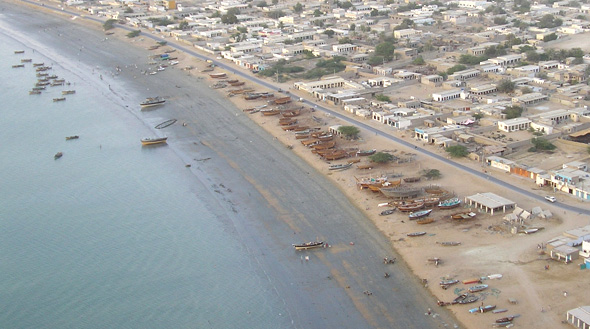
 |
| Gwadar, source: Paranda, wikipedia.org |
Showing posts with label Article. Show all posts
Showing posts with label Article. Show all posts
Saturday, 21 January 2012
Thursday, 19 January 2012
Illegal occupation of Balochistan by Pakistan
How Balochistan occupied
By Hussain Bux Thebo
Dear Readers ,
As student of history I want to share with you about Kalat Occupation.The sorrowful state of affairs of Balochistan were created because the cheat and deceit on the part of Mr. Jinnah and weakness on the part of Mir Ahmed Yar khan played pivotal role to put it into permanent bondage of subjugation.
As student of history I want to share with you about Kalat Occupation.The sorrowful state of affairs of Balochistan were created because the cheat and deceit on the part of Mr. Jinnah and weakness on the part of Mir Ahmed Yar khan played pivotal role to put it into permanent bondage of subjugation.
In 1946 the newly elected Labor Party Government headed by Clement Attlee in Britain decided to send a 3-member Cabinet Mission to India in a final bid to devise the methodology for the transfer of power in India. The Mission comprising the Secretary of State for India, Lord Pethic Lawrence, AV Alexander and Sir Stafford Cripps arrived in India on March 24, 1946.
The Khan of Kalat, on the advice of Mr, Jinnah the legal advisor to the Kalat state at the time, approached the Mission on behalf of his government to discuss the future status of his state in the scheme of independence for India. The Mission advised the Khan to have his case prepared by legal experts. Eminent lawyers as I I Chundrigar, Sir Sultan Ahmed, Sardar BK Memon and Sir Walter Monkton were hired to prepare the case for the Kalat state, which after vetting by the Quaid himself, was submitted to the Mission in the form of a memorandum.
This memorandum, briefly, re-stressed the following major points:
- That Kalat is an independent and sovereign state its status is different from other princely states of British India, its relations with the British government being based on various mutual agreements and treaties.
- That Kalat is not an Indian state, its relations with India being of only a formal nature by virtue of Kalat’s agreements with the British and that with the ceasing of the Agreement of 1876 with the Kalat government, Kalat would regain its complete independence, as it existed prior to 1876.
– All such regions including Quetta Municipality as were given under the control of the British in consequence of any treaty will be returned to the sovereignty of the Kalat state, and resume their original status as parts of the Kalat state.
On March 22, 1947, Lord Mountbatten, the last of the Viceroys of India, arrived in Delhi to wind up British supremacy in this part of the British dominions. The final partition plan of June 3, 1947 stated in respect of transfer of power in India. Mr, Jinnah wrote to the Khan of Kalat that since the position of the Kalat State was different from the other Indian States, representation on behalf of the state should be made directly to the Viceroy in Delhi to discuss the future position of Kalat and the return of Baloch regions hitherto under the control of the British Government. Accordingly, the Chief Secretary of Kalat State was sent to Delhi with a draft of the new position of Kalat as prepared by legal experts. This resulted in a round table conference, held on August 4, 1947, in which Lord Mountbatten, Mr, Jinnah, Mr Liaqat Ali Khan, Chief Minister of Kalat, Sir Sultan Ahmed, the legal Advisor of Kalat State and the Khan of Kalat took part in the deliberations The following points were agreed upon:
“Kalat State will be independent on August 5, 1947, enjoying the same status as it originally held in 1838, having friendly relations with its neighbors. In case the relations of Kalat with any future government got strained, Kalat will exercise its right of self-determination, and the British Government should take precautionary measures to help Kalat in the matter as per the Treaties of 1839 and 1841.”
As a corollary to the round table conference at Delhi, another agreement was signed between Kalat and Pakistan on August 4, 1947. The points agreed upon were broadcast on August 11, 1947, as under:
“The Government of Pakistan agrees that Kalat is an independent state, being quite different in status from other states of India; and commits to its relations with the British Government as manifested in several agreements.. … In the meantime, a Standstill Agreement will be made between Pakistan and Kalat by which Pakistan shall stand committed to all the responsibilities and agreements signed by Kalat and the British Government from 1839 to 1947 and by this,…. In order to discuss finally the relations between Kalat and Pakistan on matters of defense, foreign relations and deliberations will be held in the near future in Karachi.”
“The Government of Pakistan agrees that Kalat is an independent state, being quite different in status from other states of India; and commits to its relations with the British Government as manifested in several agreements.. … In the meantime, a Standstill Agreement will be made between Pakistan and Kalat by which Pakistan shall stand committed to all the responsibilities and agreements signed by Kalat and the British Government from 1839 to 1947 and by this,…. In order to discuss finally the relations between Kalat and Pakistan on matters of defense, foreign relations and deliberations will be held in the near future in Karachi.”
A few weeks after the agreement, the Agent to the Governor-General informed the rulers of Kharan and Lasbela that the control of their regions had been transferred to the Kalat State. Hence they once again came under the direct influence of Kalat. The Marri and Bugti tribal region was also returned into the Kalat fold soon after. Thus the whole of Balochistan came under the suzerainty of the Khan of Kalat in the same confederacy of Baloch tribes that Nasir Khan I, in 1666-67, was able to create. The Kalat government made a formal declaration of its independence on August 15, 1947, soon after the end of British supremacy, and a day after Pakistan’s coming into being on the map of the subcontinent.
Immediately, a delegation comprising the Kalat prime minister and foreign minister was sent to Karachi, the then capital of Pakistan, for discussions and an honorable settlement vis-a-vis relations with Pakistan in the light of the mutually endorsed Standstill Agreement of August 11, 1947. To shock and grief of Khan of Kalat Mr, Jinnah coarsely persuaded the Khan to expedite the merger.
The Khan replied, “I have great respect for your advice , but Balochistan, being a land of numerous tribes, the people there must be duly consulted in the matter prior to any decision I take; for, according to the prevalent tribal convention, no decision can be binding upon them unless they are taken into confidence beforehand by their Khan.” With this provisional agreement, the Khan returned to Kalat and promptly summoned the Kalat State Houses of Parliament, the Dar-ul-Awam and Dar-ul-Umra and proposed to the House to accord him a mandate on the matter of Kalat’s merger with Pakistan.
Both the Houses, however, contended unanimously that the proposal of Kalat’s merger militated against the spirit of the earlier agreement arrived at between Kalat Government and the spokesmen of Pakistan on August 4, 1947, as also against the Independence Act of 1947. This decision of Kalat’s Parliament was forwarded to the Ministry of Foreign Affairs, Government of Pakistan, for necessary processing.
Shortly afterwords, the Mr, Jinnah visited Sibi and during his stay there insisted upon the Khan to sign the merger documents in his personal capacity. Finding reluctance in Khan Govt: Pakistan Cabinet under the leadership and instruction of Mr, Jinnah working on a scheme to breakup the 500- year old state. The nature of their scheme, as it turned out subsequently, was tantamount to a political castration of the Baloch people. Illegally and in violation of of 4th August 1947 round table conference declaration and agreement made by Mr, Jinnah on the very day with Khan, Stand Still Agreement and also Govt; of Pakistan’s earlier decion, it had decided to punish and encircle Kalat and Baloch people cut off Kharan and Lasbela by giving them an equal status as Kalat and obtaining their “mergers” with Pakistan directly.
Shortly afterwords, the Mr, Jinnah visited Sibi and during his stay there insisted upon the Khan to sign the merger documents in his personal capacity. Finding reluctance in Khan Govt: Pakistan Cabinet under the leadership and instruction of Mr, Jinnah working on a scheme to breakup the 500- year old state. The nature of their scheme, as it turned out subsequently, was tantamount to a political castration of the Baloch people. Illegally and in violation of of 4th August 1947 round table conference declaration and agreement made by Mr, Jinnah on the very day with Khan, Stand Still Agreement and also Govt; of Pakistan’s earlier decion, it had decided to punish and encircle Kalat and Baloch people cut off Kharan and Lasbela by giving them an equal status as Kalat and obtaining their “mergers” with Pakistan directly.
Makran, which had been a part of the Kalat State for the last 300 years, was made independent of Kalat on March 17, 1948; and one of the three Sardars made its ruler. Thus Makran, too, was made a part of Pakistan. These hasty, illogical, irrational and politically illegal and oppressive steps naturally disillusioned the Baloch people. They rightly felt that all their erstwhile services and sacrifices in the cause of Pakistan were now forgotten. So deep was their despair and frustration that several of them wanted to revolt. Meanwhile, the wave of hatred and animosity generated by the irrational policies of the Government of Pakistan against Kalat was fast gaining dangerous dimensions all over Balochistan. Feelings in the tribal areas particularly were running high against Pakistan and the Baloch people were calling the position of the Khan of Kalat himself into question.
Things were moving fast towards a show down. The Government of Pakistan instructed the Brigadier in Command at Quetta to go on full alert for action against Kalat state and the Agent to the Governor General began to prepare for police action. This was the situation as it stood in the first quarter of 1948 triggered by the illogical actions of the Pakistan. Under duress Khan of Kalat signed the merger documents in his personal capacity on March 27, 1948, in an effort to diffuse the situation in Balochistan. In his autobiography, he admits that he did not have the mandate to sign the merger without the consent of the Houses of Parliament of Kalat State. A fortnight after the merger, on April 15, 1948, the Agent to the Governor General in Balochistan issued an order in the name of Mr, Jinnah, and the legal entity of the Khan of Kalat was abolished and within 20 hours of the order many of the members of the Balochistan Cabinet were arrested or exiled from Balochistan. Prince Abdul Karim’s revolt and first Baloch armed struggle started in this background.

Monday, 16 January 2012
Analysis over US State Department Comment on Balochistan - By Adeenag Baloch
How has the world changed? Those who had no voice in the past are now being heard in the most prestigious places. Of course I am pointing to the US Department of State and its recent comment on Genocide in Balochistan.
Hundreds of computers and smartphones from US to GCC countries, Europe to India and even in mainland Balochistan, were used by Baloch activists sitting at their homes, logged in to twitter accounts to force the most powerful country to comment on Balochistan issue. It is a great success of Baloch activism. It reflects how Baloch movement has grown up and how it has disassociated itself with past mainly tribal struggle. Let me first comment on the much waited comment.
Hundreds of computers and smartphones from US to GCC countries, Europe to India and even in mainland Balochistan, were used by Baloch activists sitting at their homes, logged in to twitter accounts to force the most powerful country to comment on Balochistan issue. It is a great success of Baloch activism. It reflects how Baloch movement has grown up and how it has disassociated itself with past mainly tribal struggle. Let me first comment on the much waited comment.
The first came the question and a précised and well worded: @Cadet1081 : @USAUrdu# AskState : "Pakistan is committing a genocide of Baloch Nation. Why US does not intervene and make us get our freedom?"
Then followed the well versed and probably well calculated answer: “This was a very popular question on our feeds we wanted to make sure we answer this today. United States is deeply concerned about the ongoing violence in Balochistan, Specially targeted killings, disappearances and other human right abuses. This is a complex issue. We strongly believe that the best way forwards, is for all the parties to resolve their differences through peaceful dialogue. We take the allegation of human rights abuses very seriously; and we have discussed this issues with Pakistani officials and also urge them to really lead and conduct a dialogue that takes this issue forwards".
Let us analyse it word by word as world diplomacy has its own language.
First selection of the tweet: the tweet says that Pakistan is committing genocide of Baloch Nation. The selection of the question containing the word genocide means that US agree that the issue is very serious. International diplomacy is very selective in the use of language. The answering and commenting means it recognizes the issue. It is indirect recognition that Balochistan is an issue.
US in the past never recognized the issue of Balochistan. To give one example, in 1962, when Henry Kissinger was in Pakistan on a troubleshooting mission for US President J. F. Kennedy, a local journalist asked him to comment on Baloch insurgency. His answer was: 'I wouldn't recognize the Balochistan problem, (even) if it hit me in the face." So it was a negation of the issue.
Now, State department termed it "a very popular question on our feed" and "deeply concerned". The word deeply means that this issue deeply concerns them and US has interests in the issue. US also recognize that there are humanitarian issues such as disappearances and human right abuses. The comment also gives a solution and affirms that there are parties to the conflict. It does not categories the parties to the conflict. Anyway there are two main parties in the conflict: Pakistan military and Baloch Armed Struggle: BLA, BLF and BRA. It is indirect recognition of legitimacy of Baloch armed struggle by terming them parties into the conflict. So, it is great achievement for Baloch Resistance Movement.
The other part of question was US intervention in Balochistan. She did not comment on it. She did also not negate it. Neither had she affirmed it. Therefore, US have options on the table yet. To use a Shakespearean phrase, they are still thinking "to do it or not to do it."
Now let us come back to the change in Baloch Resistance Movement. The state department's comment reflects that Baloch Movement has significantly changed. It has modernized itself. The cadres no more are only tribesmen who rally behind a Sardar when he rebels against the state. Nor they are students in the universities. They are also professional. They use their smart phones and laptop to write, tweet, and comment on the issue of genocide in Balochistan. They all rally for one cause: Free Balochistan. This diversification of the Baloch Movement does not augur well for Pakistani state. The diversification in the movement is symbolized by Dr Allah Nazar who is from the commoner in Balochistan.
Another factor in Baloch movement is that women and girls are playing a major role. They are cadres of student organizations, up in open resistance with Pakistani army, protesting in front of press clubs, in hunger strikes for missing persons and writing and tweeting on twitter and Facebook.
Pakistani state has always strived to restrain Baloch women from actively taking part in politics and social activities by promoting and creating organizations and groups that misinterpret Baloch traditions by provoking strong sentiments linked to dishonour against liberal activities of Baloch women. So Baloch curtailed his own wings by restraining women from committing such acts of dishonours. Things are changed now. It should be noted that girls were very active in tweeting to the State Department that resulted in coming forth of the statement. The female factor is becoming a significant factor in Baloch Resistance. In future women and girls will be playing a greater role.
Sunday, 15 January 2012
COMMENT: Beware of Greeks bearing gifts —Mir Mohammad Ali Talpur

Prime Minister Gilani has declared 2012 the ‘Year of Balochistan’. The Baloch people are naturally sceptical as they know not what it portends because the Aghaz-e-Haqooq-e-Balochistan gift brought hundreds of brutally tortured bodies of the Baloch youth and intellectuals in its wake.
The Baloch are extremely suspicious of the Pakistani state’s gifts; they, like the Trojans, through bitter experience have learnt to ‘beware of Greeks bearing gifts’. The Baloch understand the truth of the ancient proverb because all the gifts given to them have been laced with death, devastation and desolation.
Sophocles (496-406 BC), in Ajax, says:
“Nought from the Greeks towards me hath sped well.
So now I find that ancient proverb true,
Foes’ gifts are no gifts: profit bring they none.”
The Pakistani gifts have never benefitted the Baloch. The very first gift was the forced annexation to Pakistan in March 1948 on the plea that as Muslims all should give up their rights and submit to the Pakistani rulers’ ideology and this has been the source of all Baloch agony and anguish.
Then Nawab Nauroz Khan Zarakzai, who resisted injustices against the Baloch, accepted the gift of amnesty on May 19, 1959 on the covenant of the Holy Quran but that pledge was horrendously violated and his eldest son Battay Khan Zarakzai, along with Sabzal Khan Zarakzai and Ghulam Rasool Nechari were hanged at Sukkur while Jam Jamal Khan Zehri, Masti Khan Musiyani, Wali Mohammad Zarakzai, and Bahawal Khan Musiyani were hanged at Hyderabad on July 15, 1960.
The gift of the 1973 Constitution in August that year saw the incarceration of Khair Bakhsh Marri, Ghaus Bakhsh Bizenjo and Ataullah Mengal within hours. This was preceded by the gifts of dismissal of the elected Balochistan government of Ataullah Mengal in February and extensive army operations in May.
The much applauded gift of ‘freedom of the press’ has seen eight journalists from Balochistan being killed last year. Freedom of expression means nothing where freedom of life is denied, with hundreds going missing and ending up dead. Pakistan is truly generous in bestowing such gifts on the Baloch people.
The gift of Gwadar port to the Baloch people saw the military and civilian land mafias swoop to deprive the people of their land and to change the demography of the area. Syed Fazl-e-Haider, a respected developmental analyst, in his piece, ‘The limping Gwadar port’, wrote: “Pakistan Navy had acquired 584 acres of land with seafront from Balochistan government in 1980. On refusal of the Navy to hand over the land, the previous government (Musharraf’s) decided that Pakistan Navy would hand over only 30 acres to GPA for developing the road-rail-link leading to the free zone at Gwadar port.”
The irregularities, transgressions and frauds in land deals were so extraordinarily vicious that Justice Javed Iqbal and Justice Raja Fayyaz Ahmed of the Supreme Court in their October 2006 judgement ordered the cancellation of allotment of residential and industrial plots in Gwadar and said: “The allotment of land in Gwadar has been made in violation of the policies formulated by the government itself. The discretionary power has been exercised in an arbitrary and capricious manner, which has been cited as a clear example of abuse of authority and misuse of power. Nobody knows how the settled land owned by the state has been transferred to private sector, that too on peanut price which depicts lack of transparency and mismanagement.” The Supreme Court’s December 2009 decision regarding demolition of Makro-Habib on Webb Ground in Karachi has not yet been implemented so it is highly unlikely that powerful mafias will abide by the court’s decisions in Gwadar.
Much to the chagrin of the Baloch people and in utter disregard of their wishes, Gwadar is militarised. For the new Gwadar airport 6,500 acres were bought by the Military Estates Officer (MEO) in Quetta instead of the Civil Aviation Authority (CAA), making it the property of the Pakistan Army. London’s Heathrow (2,965 acres) is half its size and there at peak time a plane lands or takes off every 46 seconds; it handles more than 125 million passengers annually.
Moreover, there are restrictions on fishing due to their security concerns, thereby depriving the people of livelihood. Little wonder then that on December 30, 2009 when the prime minister, chief ministers and ministers with their hordes of officials landed in Gwadar with fanfare to gift the NFC Award, the people there observed a complete shutter down strike while these luminaries were there.
Chaghai has received more than a fair share of gifts; topped by nuclear weapons testing. On May 28, 1998, Raskoh Mountain died and dangerous radioactivity became a permanent gift for the people; abnormalities in the population are being regularly reported. France carried out 41 atmospheric nuclear tests between 1966 and 1974 and later 147 underground tests at Mururoa Atoll. When the people protested, France claimed zero fallout; they countered: then why were not tests carried out near Paris? Kazakhstan bore the brunt of Soviet nuclear tests. Colonies are treated similarly everywhere.
The Saindak copper and gold reserves could have been a blessing for future Baloch generations but as a gift for the Baloch people the Metallurgical Construction Company of China (MCC) was given the mining rights; their overexploitation has reduced the 19 years lifespan by a decade. Balochistan’s pathetic share is two percent only, i.e. $ 0.7 million royalty annually — the rest goes to Pakistan’s coffers. Reko Diq is the next on their gift list but it is not certain whose bonanza it will become.
Not only the mineral wealth is exploited, the endangered migratory Houbara Bustards too are being hunted to extinction by Arabs states’ rulers. Balochistan districts are allotted to one or the other ruler. The previously disused Bhandari Airstrip and now notorious Shamsi Airbase in Balochistan was leased to the United Arab Emirates (UAE) in 1992 for game hunting by the royal family. They developed it into a jet-capable airfield and gave it to the US in 2001.
Even a heavy tome would be insufficient to list all the gifts but I suppose you get the drift why the Baloch are wary of gift-bearing Pakistani prime ministers and politicians. Imran Khan has apologised and Nawaz Sharif has floated the idea of an All Parties Conference (APC) for Balochistan. In the 1960s and 70s, hospitals dispensed medicine using tinctures and powders. The universal painkiller was APC, i.e. aspirin-phenacetin-caffeine in ratio of 3:2:1. The Balochistan problem has gone beyond the APC headache remedies and meaningless apologies.
The writer has an association with the Baloch rights movement going back to the early 1970s. He can be contacted at mmatalpur@gmail.com
Friday, 13 January 2012
A local hero
By Karlos Zurutuza
Amin is an amazing man. I met him back in 2009, during a brief stopover in Khuzdar, a heavily militarized and violence-stricken spot in Balochistan. It was an unplanned encounter but we still spent around two hours together before I jumped on my bus bound for Karachi. Despite the short stay, that was one of my most memorable moments during my first visit to Balochistan.
Over a cup of tea inside his house, Amin told me that had spent several years involved in Baloch politics. For years, he had tried to convince Baloch leaders to set up new schools in Khuzdar. "Education is the crux of the matter for us, for everybody, but some people seem not to understand this," insisted Amin.
When we consider that many people in this gas rich region still cook with dung and that water supplies are scarce, and sometimes even radioactive due to nuclear testing, schools may look like infrastructures of lesser importance. Thus, Amin's plea to build schools was never heard by Islamabad, nor did well-off local tribal leaders lift a finger to tackle one of their people's biggest problems. The illiteracy rate climbs well over 70% among the Baloch - the highest rate in the entire country of Pakistan. I guess uneducated people are more servile and never ask uncomfortable questions.
So Amin decided to quit politics. He borrowed some money to buy a piece of land next to his house and raised a humble building on it during his free time with the help of friends and relatives. He would build and run a school by himself: "Habib Grammar School." Amin also had his own job so classes started in the afternoon, after work. That day he had an English class and he invited me to join him. "The kids will be happy to meet you," he said.
There were five girls in the class, ages 12 to 14. I recall a couple of them were Baloch and there was also a Punjabi and two Pashtuns. All of them said they loved English. I wish I could remember their names but I forgot to write them down.
Amin had given them a composition as homework the day before and, one by one, the girls stood up to read their pieces. They were visibly shy, but none of them would miss the opportunity to read their pieces to their first "Englishman" ever, despite myself being a Basque from Spain.
They all read their drafts slowly, watching their pronunciation with great care, as if they were reading a sacred text. The rest kept a revered silence. Emotion made me deaf; I couldn't even pay attention to the words the girls were reading, but I could see Amin nodding after every sentence. "What a great job he is doing," I thought. "What a great man he is."
Emotion made me deaf; I couldn´t even pay attention to the words the
girls were reading, but I could see Amin nodding after every sentence.
"What a great job he is doing," I thought. "What a great man he is."
 |
| Habib Grammar School recess |
Amin is an amazing man. I met him back in 2009, during a brief stopover in Khuzdar, a heavily militarized and violence-stricken spot in Balochistan. It was an unplanned encounter but we still spent around two hours together before I jumped on my bus bound for Karachi. Despite the short stay, that was one of my most memorable moments during my first visit to Balochistan.
Over a cup of tea inside his house, Amin told me that had spent several years involved in Baloch politics. For years, he had tried to convince Baloch leaders to set up new schools in Khuzdar. "Education is the crux of the matter for us, for everybody, but some people seem not to understand this," insisted Amin.
 |
| Amin holds one of the books he uses in class |
When we consider that many people in this gas rich region still cook with dung and that water supplies are scarce, and sometimes even radioactive due to nuclear testing, schools may look like infrastructures of lesser importance. Thus, Amin's plea to build schools was never heard by Islamabad, nor did well-off local tribal leaders lift a finger to tackle one of their people's biggest problems. The illiteracy rate climbs well over 70% among the Baloch - the highest rate in the entire country of Pakistan. I guess uneducated people are more servile and never ask uncomfortable questions.
So Amin decided to quit politics. He borrowed some money to buy a piece of land next to his house and raised a humble building on it during his free time with the help of friends and relatives. He would build and run a school by himself: "Habib Grammar School." Amin also had his own job so classes started in the afternoon, after work. That day he had an English class and he invited me to join him. "The kids will be happy to meet you," he said.
 | |
| The proud staff and students at Khuzdar Habib Grammar School |
There were five girls in the class, ages 12 to 14. I recall a couple of them were Baloch and there was also a Punjabi and two Pashtuns. All of them said they loved English. I wish I could remember their names but I forgot to write them down.
 |
| We want to learn English |
Amin had given them a composition as homework the day before and, one by one, the girls stood up to read their pieces. They were visibly shy, but none of them would miss the opportunity to read their pieces to their first "Englishman" ever, despite myself being a Basque from Spain.
They all read their drafts slowly, watching their pronunciation with great care, as if they were reading a sacred text. The rest kept a revered silence. Emotion made me deaf; I couldn't even pay attention to the words the girls were reading, but I could see Amin nodding after every sentence. "What a great job he is doing," I thought. "What a great man he is."
 |
| And the world froze: students read their English assignments |
Wednesday, 11 January 2012
Baloch Freedom Movement and Chinese Strategic Design!
By Archen Baloch
At the sacred altar of Chinese interests in Balochistan Pakistan military slaughtered more than nine prominent Baloch political workers under detention and dumped their tortured bodies on different location cross Balochistan during Chinese premier, Wen Jiabao’s three days visit to Islamabad after India on December 17, 2010. And surprisingly the state controlled private media was vigorously giving coverage to these massacres right after every bet of news of Chinese premier activities in Islamabad. The motive behind it was to show the Chinese that Pakistan is doing everything to protect the Chinese interests in Balochistan even if it has to flow the river of blood in Balochistan. Mehboob Wadhela and Master Arif were among the prominent bulwarks that stood against the Chinese imperialistic interests in Gwadar embraced the martyrdom.
The very image of Pakistan, in Balochistan and outer world, is that of a mysterious serial killer that abducts, kills and dumps the bests of Baloch youths. Pakistani state relationship with Baloch People is painted with red blood. So far more than 360 activists have been killed under custody of Pak Army. And thousands of political workers are missing. Their fates are not known what have happened to them. All have been registered in the trusted books of world human rights organizations.
Balochistan was an independent Baloch sovereign state. Pakistan invaded it on March 27th, 1948 at the behest of the then British Raj and forcefully annexed it against the will of Baloch People. Being left alone at the mercy of Fundamentalist Pakistani military, world community never paid any attention to the atrocities Pakistan inflicted upon Baloch nation ever since. However, being a diehard nation it never disheartened them from seeking their lost independence.
But what Pakistan doesn’t understand is that Baloch is a diehard secular natured nation. Even if it has deprived them of education for centuries, but politically Baloch are more matured and conscious than any nation in the neighborhood. This has unified them in the resistance movement. Despite spending rupees in billions in establishing Madrassas (religious schools) in Balochistan Pakistan failed to radicalize Baloch into a religious extremist society necessary to subscribe to Pakistani national ideology of two nations theory. Ideologically Baloch People believe that Pakistan is a fundamentalist state biased towards other religions and cultures. It always suppresses religious minorities and never tolerates cultural diversity, Therefore Baloch nation has become its cultural victim.
How far Balochistan has moved away from Pakistani state clutch is evident from the fact that if one read the articles written by Pakistani writers in the last three weeks regarding Balochistan crisis, one won’t fail to detect their fear and comprehension about how volatile the situation is in Balochistan.
Baloch are more interested in seeing how much Pakistan is suffering from gas energy crisis and isolated from international community than the political and judicial quarrels in Islamabad. The constant attacks on Gas pipelines have generated ripple effects on Pakistan economy. One cannot simply ignore the social unrest in Punjab cities without linking it Baloch national insurgency.
Being highly organized, the armed organizations of Baloch Sarmachars, the freedom fighters, namely Baloch Liberation Army, Baloch liberation front, Baloch Republican Army, have utterly paralyzed Pakistani ground troop’s movement in Balochistan in isolated camps and check posts.They are overstretched in the vicious terrain of Balochistan.Being a foreign force, it is totally alienated from general society of Balochistan.Their fighting morale is depleted by being constantly high alert against guerilla attacks.They are extremely vulnerable and exposed to guerrilla attacks because their enforcement capacity is hampered by long distances.Pakistani ground troops would capitulate to Baloch Sarmachars, the Freedom Fighters, within weeks if not within days if aerial support from international community was rendered to them like they did in Libya against tyrant Gaddafi forces.In An interview with BBC, the field commander of Baloch liberation Front, Dr Alla Nizer said they call for international support and added that their forces could be merged into a single entity whenever the circumstances allowed them.
Now that Baloch national struggle for freedom has reached to new heights. In International media our voice is being heard. We have a just cause to pursue; that is the freedom of Balochistan from the unjust occupation by Pakistan. In the foreseeable future, we can see that the conflict between Baloch and Pakistan is going to intensify.
So far Baloch Sarmachars have confined their operation and actions within Balochistan geography targeting Pakistani armed forces, the state’s institutions and installations of railways and gas pipelines and every sign that shows the existence of Pakistan on Baloch soil and the ISI agents spying for Pak Army, whether they are settlers or locals.
If the situation was allowed to linger on like this and no intervention took place from world powers on the legitimate appeal of Baloch leaders, the human catastrophe will be highly extensive. And two things are likely to happen: first, being on edge, Baloch armed guerrilla leaders did not rule out the possibility of stepping out of Baluchistan’s geographic boundaries to carry out lethal actions against Punjab’s major cities such as Lahore and Rawalpindi. Even suicidal attacks could be an option, as BLA recently carried out it against Pakistani intelligence officers.
The second, Pakistan all along has been putting the blame on India that Baloch insurgency is being abetted by India. Now given the near future events, Pakistan’s frustration will grow to a limit where it, out of sheer frustrations, starts harming Indian interests in different Place and time.
It is a mystery why Baloch freedom movement is not being supported or opposed by world powers, despite the fact that Pakistan is committing vicious crimes against humanity in Balochistan, enough to prosecute it in Hague. So much so that it has wiped out an entire generation of Baloch leadership.
The nagging question is how much American has compromised on Balochistan issue with Pakistan during heyday of their good relationship on terrorism? In Baloch political society and media it’s widely believed that the world powers would themselves intervene and come to Baloch aid at their own convenience, arguing that world powers are still disentangling themselves from Pakistani blackmails.
Pakistani military and political establishment is more interested in courtship of a super power. During cold war Pakistan sought American courtship and exploited geostrategic situation of the region and suppressed Baloch and Pushton dissent voices. Our fear is that the same is going to be repeated here again, albeit with new Partners. With new geostrategic partnership Pakistan has started to seek defense pact with China and Iran. At the core of this new triangle strategic alignment lays the fear of Baloch freedom movement which has, all along, been calling for help from international community. Under Chinese strategic objectives Gwadar Deep Sea port is being prepared to establish bases for Chinese Naval ships.
Under the disguise of Five Principles of Peaceful Coexistence, Chinese exploitation of Baloch resources sees no limits in Balochistan, from Gwadar coast to gold and copper rich Chaghi region, from oil and gas rich areas of Dera Bugti and kohlu to the beautiful mountains of Jahlawan for marble extraction. Pakistan has allowed China open access to exploitation of Baloch resources.
According to a prominent Baloch research scholar, Sana Baloch “The resources here are being extracted by a Chinese company, without any independent monitoring for the past seven years. According to official reports copper-gold worth $633.573m were produced during 2004-08. The Balochistan government receives a paltry two per cent share, while half the profits go to Beijing and 48 per cent to Islamabad. The fortified Saindak project is a no-go area for the Baloch people”.
Last word: Baloch deserve the right to know why the managers of world affairs are apathetic about Baloch crisis. Is it a tacit consent to Chinese exploitation of Baloch natural resources and affirmative nod to Pakistani atrocities against the secular Baloch people?
Sunday, 8 January 2012
COMMENT: No beast is more savage than man —Mir Mohammad Ali Talpur

The increasing apathy witnessed here in all aspects of life is certainly most disturbing for all those who want this unfathomable space’s blue and white rotating ball to become an abode of peace and harmony for all its inhabitants. Apathy is the termite that eats away at the inner moral core of individuals, groups, nations and countries, leaving a hollow outside structure incapable of any good to humanity. Apathy gives a free rein to the perpetrators of violence.
I know not all of us are zealous revolutionaries like Che Guevara who gave up his Cuba ministry to fight for the oppressed of the world and ended up dying in Bolivia on October 9, 1967 at the young age of 39 years. His was an exemplary life and his commitment to the oppressed people was unswerving and unreserved. He symbolises the unbending and undying revolutionary spirit, which takes on tyranny and oppression against overwhelming odds and defeats it or at least sows the seeds for its death. Surely those of us who do not resist or at least condemn tyranny become complicit, as complicit as the Balochistan government, which silently acquiesces in the murders of the Baloch.
Born in Argentina, Che travelled widely in Latin America and saw the poverty and oppression firsthand, which made him a revolutionary. His contribution to the Cuban Revolution is legendary and unique. Once a lady with the family name of Guevara inquired about the part of Spain his family had come from, suggesting a possibility of being related. He wrote, “I do not think you and I are very closely related, but if you are capable of trembling with indignation each time than an injustice is committed in the world, we are comrades, and that is more important.” His letters always ended with ‘Patria O Muerte’ and ‘Venceremos’, which mean ‘Fatherland or Death’ and ‘We shall overcome’ respectively. These were not empty words; no sacrifice was too big for him where the wretched and the oppressed of the earth were concerned.
Edward G Browne in his book, A Literary History of Persia, narrates Arab poet al-Mutanabbi’s (905 AD-965 AD) incident who he says “is generally regarded by all Arabic-speaking people as the greatest poet of their race”. He says, “His verses, however, breathe the old Bedouin spirit, amongst these being the verse which, as Ibn Khallikan says, caused his death. For, as he was returning from Persia with a large sum of money, which had been bestowed on him by Buwayhid prince Adudu’d Dawla; he was attacked near Kufa by Arabs of the tribe of Asad. Being worsted in the combat, he was preparing to take flight when his slave cried to him: let it never be said that you fled from combat, you who are the author of this verse:
‘I am known to the horse-troop, the night and the desert expanse,
Not more to the paper and pen than the sword and the lance!’
So al-Mutanabbi turned to combat and met his death like a true son of desert.”
Al-Mutanabbi died to honour the verse he had written. It was an awesome commitment to one’s word, not like the politicians here who make solemn commitments to befool people. Empty words are the hallmark here. One day the ‘state within a state’ is criticised and the next day it is refuted; examples abound.
In December 1964, when the blacks were officially segregated and discriminated against in the US as they were in South Africa, Che Guevara had led the Cuban delegation to the UN. In his impassioned address, he had criticised the UN’s inability to confront the “brutal policy of apartheid” in South Africa and then denounced the US policy towards their black population, stating: “Those who kill their own children and discriminate daily against them because of the colour of their skin; those who let the murderers of blacks remain free, protecting them, and furthermore punishing the black population because they demand their legitimate rights as free men — how can those who do this consider themselves guardians of freedom?” Transpose some of the words according to the situation in Balochistan, and these scathing words also hold true for Pakistan’s actions there.
The state is edgy and nervous about the intensity of resistance to its atrocities and is indiscriminately persecuting the Baloch people. On Tuesday, the house of Lal Khan Marri, a school teacher, was raided in Hub. His elder brother, Mazar Khan, and paternal uncle Jan Ali were picked up — what will be their fate is unknown. The security forces have picked up a lot of Marris in the Marri Agency. There is no protest from any quarter barring a few journalists and columnists who now write about Balochistan. Those who speak the truth face dire consequences. The Greek philosopher Plutarch’s (46 AD-120 AD) quote rings true here: “No beast is more savage than man, when possessed with power answerable to his rage.”
In 2011, Pakistan was the deadliest country for journalists second year in a row and of the 46 killed worldwide it topped the list with seven. Balochistan suffered most with Javed Nasir Rind of Daily Tawar and Munir Shakir, correspondent Online News Network. Ilyas Nazar and Abdost Rind too were killed. Anyone exposing the atrocities in Balochistan is a fair target.
The Asian Human Rights Commission (AHRC) in a statement has said that the army has created an organisation to kill intellectuals and activists in Balochistan. It says the Tehreek-e-Nefaz-e-Aman Balochistan (TNAB) — movement for the restoration of peace in Balochistan — has been formed by secret agencies, particularly by the ISI, to crush the Baloch nationalist movement. It adds that the TNAB is said to be the armed wing of Mutahida Mahaz Balochistan (United Front Balochistan), a political party headed by Siraj Raisani, the brother of provincial chief minister Aslam Raisani.
Here apathy is not restricted to individuals only; it is deeply embedded in the soul of institutions. Ironically, the Supreme Court wastes time on trivial issues but considers the abductions, killings and dumping of the Baloch youth as unworthy of its august attention. They take offence at the slightest supposed affront but the violation of human dignity by murder and torture of the Baloch activists does not move them. Dr Baqir Shah was no militant and was eliminated for standing up for truth but no institution seems bothered. Because there is no opposition to murders and kidnapping, the security forces continue to play havoc with the lives of the Baloch.
The writer has an association with the Baloch rights movement going back to the early 1970s. He can be contacted at mmatalpur@gmail.com
Wednesday, 21 December 2011
Solve the Pakistan problem by redrawing the map
By M. CHRIS MASON
Relations between the United States and Pakistan have reached an all-time low. The Khyber Pass is closed to NATO cargo, U.S. personnel were evicted from Shamsi airbase and Pakistani observers have been recalled from joint co-operation centres.Much more importantly, senior officials in Washington now know that Pakistan has been playing them false since the attacks of Sept. 11, 2001, and understand that Pakistan was sheltering Osama bin Laden a few hundred yards from its version of West Point. The recent shelling of Afghan troops inside Afghanistan by the Pakistani army, and the NATO counterstrike, cleared in error by Pakistan, has further embarrassed the Pakistani military.
It should be obvious by now that Pakistan has no intention of doing what the United States has wanted for the past decade. The combination of wishful thinking, admiration for the emperor’s new clothes and $10-billion in payments to the Pakistani military have accomplished nothing. Admiral Michael Mullen was not wrong when he testified recently that the terrorist Haqqani network is operating as an arm of the Pakistani army. He might have added that the Taliban is the Pakistani army’s expeditionary force in Afghanistan. Pakistan shelters, funds, trains, supplies and advises the Taliban. The simple fact is that Pakistan is the world’s No. 1 state supporter of terrorism.
In Afghanistan, Pakistan will never be happy unless it has a puppet regime in Kabul and can run the country like a colony. Islamabad does not intend to allow the current Afghan constitution to remain in effect, and as soon as NATO pulls out, it will push the Taliban into an all-out civil war in Afghanistan designed to return it to power. All of which has led to a lot of hand-wringing in Washington, accompanied by a revolving-door procession of senior U.S. officials going to Islamabad to read a toothless riot act the Pakistanis can now recite by heart.
The permanent solution to the Pakistan problem is not more of this chest-beating appeasement. The answer lies in 20th-century history. In 1947, when India gained independence, a British Empire in full retreat left behind an unworkable mess on both sides of India – called Pakistan – whose elements had nothing in common except the religion of Islam. In 1971, this postcolonial Frankenstein came a step closer to rectification when Bangladesh, formerly East Pakistan, became an independent state.
The answer to the current Pakistani train wreck is to continue this natural process by recognizing Baluchistan’s legitimate claim to independence.Baluchistan was an independent nation for more than 1,000 years when Great Britain notionally annexed it in the mid-19th century. The Baluchis were never consulted about becoming a part of Pakistan, and since then, they have been the victims of alternating persecution and neglect by the Pakistani state, abuse which escalated to genocide when it was discovered in the 1970s that most of the region’s natural resources lie underneath their soil. Since then, tens of thousands of Baluchis have been slaughtered by the Pakistani army, which has used napalm and tanks indiscriminately against an unarmed population.
Changing maps is difficult only because it is initially unimaginable to diplomats and politicians. Although redrawing maps is the definition of failure for the United Nations and the U.S. State Department, it has, in fact, been by such a wide margin the most effective solution to regional violence over the past 50 years that there is really nothing in second place. Among the most obvious recent examples (apart from the former Soviet Union) are North and South Sudan, Kosovo, Eritrea, Bosnia, Croatia, Macedonia, the Czech Republic, Slovakia, East Timor and Bangladesh.
An independent Baluchistan would, in fact, solve many of the region’s most intractable problems overnight. It would create a territorial buffer between rogue states Iran and Pakistan. It would provide a transportation and pipeline corridor for Afghanistan and Central Asia to the impressive but underutilized new port at Gwadar. It would solve all of NATO’s logistical problems in Afghanistan, allow us to root the Taliban out of the former province and provide greater access to Waziristan, to subdue our enemies there. And it would contain the rogue nuclear state of Pakistan and its A.Q. Khan network of nuclear proliferation-for-profit on three landward sides.
The way to put the Pakistani genie back in the bottle and cork it is to help the Baluchis go the way of the Bangladeshis in achieving their dream of freedom from tyranny, corruption and murder at the hands of the diseased Pakistani military state.
M. Chris Mason is a retired diplomat with long service in South Asia and a senior fellow at the Center for Advanced Defence Studies in Washington.
Courtesy : http://m.theglobeandmail.com
Tuesday, 13 December 2011
Reoccupation of Western Baluchistan
By Daadol Baluch - 12/12/2011

In 1915, Bahram Khan Barakzai with his army defeated the British rulers. This battle took place in Kech area of Baluchistan. After this defeat the British army left Baluchistan and Bahram Khan was recognised as the official ruler of Western Balochistan. Some years later Bahram Khan died in Bampor. After his death Mir Dost-Mohammad Khan Barakzai became the ruler of Baluchistan. Dost Mohammad succeeded to bring most of Western Balochistan under his control.
The neighbouring ruler of Persia, Reza Khan invaded Baluchistan in 1928. His army defeated Mir Dost-Mohammad Khan’s army and arrest Dost-Mohammad Khan Barakzai with some of his close associates. They were hanged eventually by Persian rulers.
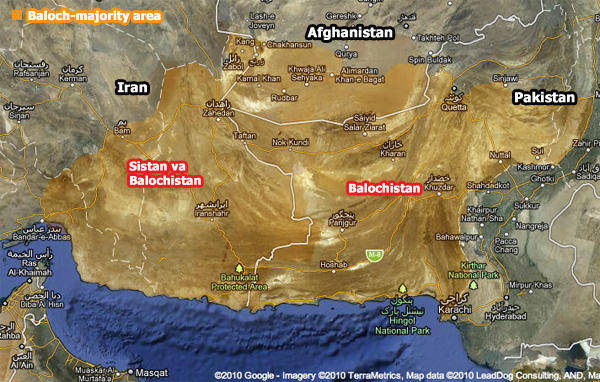
Reza Khan then made himself a king. Many of areas from other nations that were illegally occupied including Western Baluchistan were forcefully merged with Persia. Around mid 1930s this fake geo-political entity was named as Iran. Thus, the present Iran is a relatively new creation. It is basically forged by a Persian dictator. Soon after illegal occupation of Baluchistan, the new rulers of Persia intentionally divided it in different parts. The south-western part was incorporated with the Iranian province of Hormozgan, north-western part with the province of Kerman and the northern part with the province of Khorasan. The remaining part was called Baluchistan province of Iran. This was later changed to Baluchistan and Sistan, and again changed to Sistan and Baluchistan. Not only the name of Baluchistan was changed but Iran also changed the names of many Baluch cities such as Dozaap to Zahedan, Pahra to Iranshahr and so on.
The occupying rulers created a situation in Baluchistan where anyone who stood up and talked about Baluch rights ended up in prison or being sentenced to death. Shah’s dictatorship finally terminated after Iran’s revolution in 1979. Then came Khomeini and his Islamic regime. But Baluchistan remained occupied. The Islamic government’s policies towards the Baluch people have been much harsher and merciless. Khomeini’s Islamic political system has been a system of utter destruction and extermination of Baluch nation.
Since the occupation of Baluchistan by Reza Khan to the present date, many Baluch have resisted Iran’s atrocities towards their people. These include Jumma-Khan Ismaelzahi, Mehrab-Khan Nusherwani, Junaid-Khan Yarmohammad-Zahi, Daadshah and most recently Abdulmalek Rigi who was executed in June 2010. They fought with good intention but they were uninformed figures and many of them used the same tactics as the ruling occupiers against their opponents. That is why their impact on political consciousness of the Baluch people have been of much consequence did not last long. Their resistance was raw and out of sheer frustration.
Today nowhere in Baluchistan one can even find a road or a street that is named after a famous Baluch personality or a historical Baluchi name. Almost all named after Persian Historical personalities or poets. Baluch people are not allowed to choose a name for their children. The intention behind this policy is to wipe out Baloch and Baluchistan over the time or turn them into insignificant minority. So there will be no one to question their illegal occupation and their atrocities.
Iran is infamous with her rising number of executions and public hangings. It is on top of the list every year for undertaking most executions per population in the world. Baluchistan is one of the worst areas for their public hangings and their atrocities. The Baluch victims are mainly accused of crimes such as drug trafficking and being enemies of God.
The first blogger to be executed in the world was a Baluch from Iranian occupied Baluchistan. Yaqub Mehrnahad, a young Baluch blogger and the chairman of ‘Voice of Balochistan’s Youth’s Justice’ was arrested by Iranian Intelligence agencies in 2007. His only guilt was of being aware of the rights of Baluch people. After being a victim of severe torture for a year he was sentenced to death in 2008. It should be noted that Yaqub Mehrnahad was not given the right to appoint a lawyer. Mehrnahad’s younger brother, who was 17 at the time, was sentenced to 5 years in prison for cooperating with his elder brother Yaqub Mehrnahad. But it is in the spirit of humanity that as long as there is subjugation and repression the oppressed people will rise up and will resist it.
The neighbouring ruler of Persia, Reza Khan invaded Baluchistan in 1928. His army defeated Mir Dost-Mohammad Khan’s army and arrest Dost-Mohammad Khan Barakzai with some of his close associates. They were hanged eventually by Persian rulers.
Reza Khan then made himself a king. Many of areas from other nations that were illegally occupied including Western Baluchistan were forcefully merged with Persia. Around mid 1930s this fake geo-political entity was named as Iran. Thus, the present Iran is a relatively new creation. It is basically forged by a Persian dictator. Soon after illegal occupation of Baluchistan, the new rulers of Persia intentionally divided it in different parts. The south-western part was incorporated with the Iranian province of Hormozgan, north-western part with the province of Kerman and the northern part with the province of Khorasan. The remaining part was called Baluchistan province of Iran. This was later changed to Baluchistan and Sistan, and again changed to Sistan and Baluchistan. Not only the name of Baluchistan was changed but Iran also changed the names of many Baluch cities such as Dozaap to Zahedan, Pahra to Iranshahr and so on.
The occupying rulers created a situation in Baluchistan where anyone who stood up and talked about Baluch rights ended up in prison or being sentenced to death. Shah’s dictatorship finally terminated after Iran’s revolution in 1979. Then came Khomeini and his Islamic regime. But Baluchistan remained occupied. The Islamic government’s policies towards the Baluch people have been much harsher and merciless. Khomeini’s Islamic political system has been a system of utter destruction and extermination of Baluch nation.
Since the occupation of Baluchistan by Reza Khan to the present date, many Baluch have resisted Iran’s atrocities towards their people. These include Jumma-Khan Ismaelzahi, Mehrab-Khan Nusherwani, Junaid-Khan Yarmohammad-Zahi, Daadshah and most recently Abdulmalek Rigi who was executed in June 2010. They fought with good intention but they were uninformed figures and many of them used the same tactics as the ruling occupiers against their opponents. That is why their impact on political consciousness of the Baluch people have been of much consequence did not last long. Their resistance was raw and out of sheer frustration.
Today nowhere in Baluchistan one can even find a road or a street that is named after a famous Baluch personality or a historical Baluchi name. Almost all named after Persian Historical personalities or poets. Baluch people are not allowed to choose a name for their children. The intention behind this policy is to wipe out Baloch and Baluchistan over the time or turn them into insignificant minority. So there will be no one to question their illegal occupation and their atrocities.
Iran is infamous with her rising number of executions and public hangings. It is on top of the list every year for undertaking most executions per population in the world. Baluchistan is one of the worst areas for their public hangings and their atrocities. The Baluch victims are mainly accused of crimes such as drug trafficking and being enemies of God.
The first blogger to be executed in the world was a Baluch from Iranian occupied Baluchistan. Yaqub Mehrnahad, a young Baluch blogger and the chairman of ‘Voice of Balochistan’s Youth’s Justice’ was arrested by Iranian Intelligence agencies in 2007. His only guilt was of being aware of the rights of Baluch people. After being a victim of severe torture for a year he was sentenced to death in 2008. It should be noted that Yaqub Mehrnahad was not given the right to appoint a lawyer. Mehrnahad’s younger brother, who was 17 at the time, was sentenced to 5 years in prison for cooperating with his elder brother Yaqub Mehrnahad. But it is in the spirit of humanity that as long as there is subjugation and repression the oppressed people will rise up and will resist it.
Saturday, 10 December 2011
‘To be a Baloch is to embrace death’
By Rabia Ali
KARACHI:What is happening in the largest province of the country remains behind a veil of secrecy. There are some who dare to speak, but only if their privacy is protected. For “to be a Baloch openly is to embrace death,” says one such woman.
Sarah* is one of thousands of victims of oppression in Balochistan to whom the Human Rights Commission of Pakistan (HRCP) has dedicated this year’s Human Rights Day (today).
Speaking to The Express Tribune by telephone from Quetta, Sarah, 35, cannot hold back her tears when narrating the story of her province, which she says has changed colours over the years – from dusty brown to blood red.
Working for a development NGO for seven years put her in the line of fire of intelligence agencies, she says, who claimed she was an agent of an Indian intelligence agency.
In 2008, she says she was forced to quit her job and put under house arrest. Men in white shalwar kameez surrounded her house and her phones were tapped for three years, she says. Threats and harassment followed everywhere before she was granted freedom. “I am a teacher and I believe in fighting for my rights. But, for how long? I don’t know.”
Many houses in her neighbourhood have seen worse. Young boys with an eye pulled out return home in a white shroud after being picked up, allegedly by security agencies.
However, there are the lucky ones who return home alive. Two boys who went missing and miraculously returned were not willing to talk. “Our phones are tapped. Please leave us alone,” they said.
Families of those who have died or have been abducted are unwilling to speak for fear that their words might take the life of another beloved one.
This situation in Balochistan has made thousands leave the province. According to HRCP’s estimates, around 100,000 people have left since 2007.
A surgeon who moved from Quetta to Karachi says her brother was picked up and charged with false cases when he was in college in Quetta. He was lucky enough to escape to a foreign country, while all his friends met the fate of death. “Raids and kidnappings are the story of every house,” she said. Locals believe that the younger generation is being targeted. “They are trying to scare generations so that they don’t raise their voice for their rights.”
Vice chairperson of the HRCP’s Balochistan chapter, Tahir Hussain, says from July 2010 to November 2011, around 300 dead bodies were found—some even of 14-year-olds. Two dead include two people from the HRCP as well, while the number of people missing range from 5,000 to 6,000.
While locals stay indoors, leaders fighting for the separatist movements remain miles away from the danger zone. Balochistan National Party leader Akhtar Mengal is in Dubai since 2009. “If I come back, my name will be included in the ECL and I need to go abroad for a lung treatment,” he said.
Despite the top leadership being away, he sees the separatist movements growing stronger. He claims that 26 people from his own party have been killed.
The separatist movements gained momentum after Akbar Bugti’s death. “Bugti’s national flag had four stars representing the four provinces. He believed in a federation. But by his murder, the government has given the message that Balochistan will never be accepted.”
Sarah, the surgeon and Akhtar Mengal are sure of one thing: ‘There is no foreign presence or Indian agents in the province. It’s our own men behind the killings.’
*Name has been changed to protect privacy
Published in The Express Tribune, December 10th, 2011.
 |
| ABDUCTED: 5,000to 6,000 is the number of people ‘missing’ in Balochistan, according to the HRCP. PHOTO: REUTERS. |
KARACHI:What is happening in the largest province of the country remains behind a veil of secrecy. There are some who dare to speak, but only if their privacy is protected. For “to be a Baloch openly is to embrace death,” says one such woman.
Sarah* is one of thousands of victims of oppression in Balochistan to whom the Human Rights Commission of Pakistan (HRCP) has dedicated this year’s Human Rights Day (today).
Speaking to The Express Tribune by telephone from Quetta, Sarah, 35, cannot hold back her tears when narrating the story of her province, which she says has changed colours over the years – from dusty brown to blood red.
Working for a development NGO for seven years put her in the line of fire of intelligence agencies, she says, who claimed she was an agent of an Indian intelligence agency.
In 2008, she says she was forced to quit her job and put under house arrest. Men in white shalwar kameez surrounded her house and her phones were tapped for three years, she says. Threats and harassment followed everywhere before she was granted freedom. “I am a teacher and I believe in fighting for my rights. But, for how long? I don’t know.”
Many houses in her neighbourhood have seen worse. Young boys with an eye pulled out return home in a white shroud after being picked up, allegedly by security agencies.
However, there are the lucky ones who return home alive. Two boys who went missing and miraculously returned were not willing to talk. “Our phones are tapped. Please leave us alone,” they said.
Families of those who have died or have been abducted are unwilling to speak for fear that their words might take the life of another beloved one.
This situation in Balochistan has made thousands leave the province. According to HRCP’s estimates, around 100,000 people have left since 2007.
A surgeon who moved from Quetta to Karachi says her brother was picked up and charged with false cases when he was in college in Quetta. He was lucky enough to escape to a foreign country, while all his friends met the fate of death. “Raids and kidnappings are the story of every house,” she said. Locals believe that the younger generation is being targeted. “They are trying to scare generations so that they don’t raise their voice for their rights.”
Vice chairperson of the HRCP’s Balochistan chapter, Tahir Hussain, says from July 2010 to November 2011, around 300 dead bodies were found—some even of 14-year-olds. Two dead include two people from the HRCP as well, while the number of people missing range from 5,000 to 6,000.
While locals stay indoors, leaders fighting for the separatist movements remain miles away from the danger zone. Balochistan National Party leader Akhtar Mengal is in Dubai since 2009. “If I come back, my name will be included in the ECL and I need to go abroad for a lung treatment,” he said.
Despite the top leadership being away, he sees the separatist movements growing stronger. He claims that 26 people from his own party have been killed.
The separatist movements gained momentum after Akbar Bugti’s death. “Bugti’s national flag had four stars representing the four provinces. He believed in a federation. But by his murder, the government has given the message that Balochistan will never be accepted.”
Sarah, the surgeon and Akhtar Mengal are sure of one thing: ‘There is no foreign presence or Indian agents in the province. It’s our own men behind the killings.’
*Name has been changed to protect privacy
Published in The Express Tribune, December 10th, 2011.
Mutilated bodies in Balochistan and silence of International Community
By Nobat Marri
The endless recovery of mutilated bodies of Baloch activists in the deserted areas of Baluchistan is the worse of its kind of the human rights violations by Pakistani forces. The disregarding behavior of Pakistani media toward Baluchistan issue is another unethical tactic of Punjabi army to hide their crimes from the international community, what is sometimes described as the “civilized World”.
One is compelled to ask the question: For how long they can hide their crimes against Baloch nation and mislead the International Human Rights Organisations? Maybe one year, two year or even several years but eventually the reality will come out – for nobody can hide the truth. A wrongdoer is a wrongdoer no matter how hard he/she tries to conceal its crimes, in the end the punishment of the wrong actions is inevitable.
 The degree in which Pakistan’s crimes against humanity can easily be measured by having a glance at the above pictures of Baloch minors that have been subjected to severe torture and killed under custody. It shows how Pakistan’s Punjabi army is trying to eliminate the Baloch by eradicating the cream of the Baloch society mercilessly. More then 350 bodies of Baloch youths have been discovered from roadsides and barren areas since July 2010. Baloch should learn from these crimes of Pakistan and make a well-planned strategy to counter Pakistani barbarism against Baloch people. If some of us, the parliamentarians, still they think Pakistan and its fanatic army is their savior, then it is nothing but the misfortune of Baloch Nation.
In this crime against humanity, the criminal is not only Pakistan but also all those states that are helping Pakistan without any accountability in the name of so-called war against terrorism. The money and weapons provided to counter Taliban are being used against Baloch national struggle for independence. Yet the International allies of Pakistan, clearly knowing the fact that Pakistan is cheating them, are ignoring its crimes and gross human rights violations against Baloch people.
In its disgusting efforts to talibanise and pollute the minds of Baloch youth with its extremists ideology the state of Pakistan has let loose its preacher groups or religious fanatics across Balochistan. It is obvious the intentions of creating and promoting religious fanatic and other such groups are being financed by Pakistani ISI and MI to counter the Baloch struggle for national liberation and turn the Baloch from secularism to fanaticism.
These criminal and Jihadist state agencies are involved in acid attacks on Baloch women, abductions and killings of political activists, students, teachers, lawyers, doctors and other well-educated members of Baloch society. They accuse the Baloch secular forces of being anti-Islam and thus condemnable to death. They believe: “Pakistan is the fort of Islam, Pakistan was created by God, Pakistan’s purpose is La illah Ililah.” Since secular and moderate Baloch forces in Balochistan do not agree with such senseless slogans of ISI and MI that’s why according to Pakistan Baloch are apostates and should be killed – as it is a great service to Islam.
Baloch nation consider the abductions and killings of the Baloch youths by these organizations, a crime against humanity and holds the state of Pakistan responsible for such crimes. Pakistan it continuing her dirty war in Balochistan under the guise of these civil death squads.
The second culprit is the Pakistani media, which is ignoring these crimes against humanity committed by Pakistani ISI, MI, FC and their proxy death squads. The silence of state sponsored media has further encouraged these criminals to continue their crimes with impunity. Pakistani media does not give coverage to the recovery of mutilated bodies of Baloch youths which are found on daily basis across Balochistan, but the actions of Taliban in Afghanistan and preaching of the groups of Pakistani ISI, MI and FC are printed on front-pages. Which illustrates that Pakistani media too is more supportive to the state and its extremist groups.
The struggle of Baloch nation has always been and is according to the UN charter but United Nations has so far been ignoring the crimes and atrocities of Pakistan and Iran. The crimes against humanity by these states are against the universal declaration of human rights. The declaration which was adopted by UN general assembly, on 10th December was proclaimed to end the discrimination by campaigning for equitable and effective laws, reporting and investigating human rights violations and supporting victims, has failed to even utter a single word against the human rights violations in occupied Balochistan.
Baloch nation on this day 10th December would like to ask international community whether Baloch nation is considered as human beings, if so then why UN is not investigating the crimes against humanity by Pakistan in occupied Balochistan?
The Baloch nation has high hopes from the International Community and International Media. It is hoped that they will step forward and highlight the genocide of Baloch nation being committed by fanatic and Jihadist Pakistan and Iran. Baloch Nations wants the UN, NATO forces and other International Powers to physically intervene in Balochistan in similar fashion they did in Libya, Syria and South Sudan.
The endless recovery of mutilated bodies of Baloch activists in the deserted areas of Baluchistan is the worse of its kind of the human rights violations by Pakistani forces. The disregarding behavior of Pakistani media toward Baluchistan issue is another unethical tactic of Punjabi army to hide their crimes from the international community, what is sometimes described as the “civilized World”.
One is compelled to ask the question: For how long they can hide their crimes against Baloch nation and mislead the International Human Rights Organisations? Maybe one year, two year or even several years but eventually the reality will come out – for nobody can hide the truth. A wrongdoer is a wrongdoer no matter how hard he/she tries to conceal its crimes, in the end the punishment of the wrong actions is inevitable.

In this crime against humanity, the criminal is not only Pakistan but also all those states that are helping Pakistan without any accountability in the name of so-called war against terrorism. The money and weapons provided to counter Taliban are being used against Baloch national struggle for independence. Yet the International allies of Pakistan, clearly knowing the fact that Pakistan is cheating them, are ignoring its crimes and gross human rights violations against Baloch people.
In its disgusting efforts to talibanise and pollute the minds of Baloch youth with its extremists ideology the state of Pakistan has let loose its preacher groups or religious fanatics across Balochistan. It is obvious the intentions of creating and promoting religious fanatic and other such groups are being financed by Pakistani ISI and MI to counter the Baloch struggle for national liberation and turn the Baloch from secularism to fanaticism.
These criminal and Jihadist state agencies are involved in acid attacks on Baloch women, abductions and killings of political activists, students, teachers, lawyers, doctors and other well-educated members of Baloch society. They accuse the Baloch secular forces of being anti-Islam and thus condemnable to death. They believe: “Pakistan is the fort of Islam, Pakistan was created by God, Pakistan’s purpose is La illah Ililah.” Since secular and moderate Baloch forces in Balochistan do not agree with such senseless slogans of ISI and MI that’s why according to Pakistan Baloch are apostates and should be killed – as it is a great service to Islam.
Baloch nation consider the abductions and killings of the Baloch youths by these organizations, a crime against humanity and holds the state of Pakistan responsible for such crimes. Pakistan it continuing her dirty war in Balochistan under the guise of these civil death squads.
The second culprit is the Pakistani media, which is ignoring these crimes against humanity committed by Pakistani ISI, MI, FC and their proxy death squads. The silence of state sponsored media has further encouraged these criminals to continue their crimes with impunity. Pakistani media does not give coverage to the recovery of mutilated bodies of Baloch youths which are found on daily basis across Balochistan, but the actions of Taliban in Afghanistan and preaching of the groups of Pakistani ISI, MI and FC are printed on front-pages. Which illustrates that Pakistani media too is more supportive to the state and its extremist groups.
The struggle of Baloch nation has always been and is according to the UN charter but United Nations has so far been ignoring the crimes and atrocities of Pakistan and Iran. The crimes against humanity by these states are against the universal declaration of human rights. The declaration which was adopted by UN general assembly, on 10th December was proclaimed to end the discrimination by campaigning for equitable and effective laws, reporting and investigating human rights violations and supporting victims, has failed to even utter a single word against the human rights violations in occupied Balochistan.
Baloch nation on this day 10th December would like to ask international community whether Baloch nation is considered as human beings, if so then why UN is not investigating the crimes against humanity by Pakistan in occupied Balochistan?
The Baloch nation has high hopes from the International Community and International Media. It is hoped that they will step forward and highlight the genocide of Baloch nation being committed by fanatic and Jihadist Pakistan and Iran. Baloch Nations wants the UN, NATO forces and other International Powers to physically intervene in Balochistan in similar fashion they did in Libya, Syria and South Sudan.
Tuesday, 6 December 2011
Mir Gul Khan Naseer: the pioneer of Balochi revolutionary poetry

December 6 is marked as the 28th death anniversary of Mir Gul Khan Naseer who enjoys an unparalleled position in the pantheon of Balochi poets. With his inspirational verses, he gave a new dimension to modern Balochi revolutionary poetry in the post-partition period. Born in 1914, at Nushki, Balochistan, Gul Khan made his first appearance in the realm of literature in the early 40s during the hay-days of the Progressive Movement. He was among the few Progressive Balochi writers who stayed committed to the ideology of the said movement till their last breath. Initially, he used Urdu as the medium of his poetic expression, but soon diverted his attention from Urdu and began inking poems in his first language, Balochi. “Gulbang”, the first collection of his Balochi poetry appeared in 1951. It is also marked as the first ever collection of modern Balochi verse. As he drew inspiration from the Progressive Movement, the poor peasant who is bereft of attire and footwear, time and again appears in his poetry, for whom he dreams of a society where injustice, cruelty, indiscrimination and suppression have no room. In Gul Khan’s poetic dictionary, one can hardly find expressions like rosy cheeks, intoxicated eyes and scented locks. Instead, it is adorned with typical expressions like hunger, empty stomach, shirtless people, darkness and oppression to mention a few. It may seem somewhat strange, yet true, that despite his close affiliations with tribal leaders, so for, Gul Khan Naseer is the only Balochi poet who vehemently condemns the deeply rooted tribal society of Balochistan. He has always viewed the tribal sardars and landlords as the tormentors of poor farmer and the ordinary masses and raised his voice for social justice, equality and, above all, reverence of humanity. A quatrain goes like:
When the world starts to constrict around the poor man His mutilated naked form is left to fend for his hungry gut
Then it’s better from this life of misery and torture If war ensues, heads roll & lavish palaces are burnt to the ground (Translated by Anonymous.)
Mir Gul Khan Naseer has rendered equally valuable contributions in the field of translation. In 1980, he translated Faiz Ahmed Faiz’s Sar-i-wadi-Seena into Balochi under the title Seena-i-Keechag aa. In 1983, he translated a few selected poems of Shah Abdul Latif Bhathai entitled Shah Lateef Gosheet. His interest as a translator was not confined to literature. He has also rendered a couple of English books into Balochi. In 1979, he translated General Dyre’s The Raiders of Frontiers under the title Balochistan kay Sarhadi Chapa Mar. Similarly, in 1969 he rendered Longworth Dams the Baloch Race into Balochi under the title Kouch o Baloch.
As a historian Mir Gul Khan Naseer is an authority figure on Balochistan history. His book Tareekh- i-Balochistan is considered as an authentic source on the subject. Mir Gul Khan Naseer was a born nationalist and remained associated with various political organisations in his political career, which spans more than four decades. In 1936, he served as the first general secretary of the Anjuman-i-Isamia-i-Kalat. In the following year, he became the first vice president of the famous Kalat State National Party. After the annexation of the Kalat state into Pakistan, he joined the Pakistan National Party and the National Awami Party and served as the latter’s provincial president in Balochistan. In 1972, he served as the senior minister in the maiden provincial cabinet of Balochistan.
Mir Sahib was incarcerated on and off on various trumped up charges and he spent a total of some fifteen years behind bars. Though these years were traumatising as he underwent severe inhuman torture in torture cells, they were quite productive for Balochi literature as he accomplished most of his literary projects during the days of his imprisonment. Mir was a seasoned politician, but today he is better known for his revolutionary poetry. He enjoys the same status in Balochi literature as does Habib Jalib in Urdu. He is the first modern Balochi poet who made his oppressed people aware about their rights to liberty and self-determination. Today, from Atta Shad to Allah Bux Bozdar, almost upon all modern Balochi poets, the imprints of Mir’s poetry can easily be traced. Even the poets somewhat skeptical about Gul Khan’s poetic sensibilities couldn’t avoid his impact. In 2001, the government of Pakistan, belatedly realising the meritorious services of Mir Gul Khan Naseer, posthumously awarded him the Sitara-i-Imtiaz. According to Prof Dr Abdul Saboor Baloch, along with Faiz Ahmed Faiz, Mir Gul Khan Naseer was too nominated for the Lenin Prize by the USSR government, but the latter was not granted permission by the Ayub Khan’s regime to fly in to receive the said award. Mir Gul Khan Naseer passed away on December 6, 1983, from chronic lung cancer.
Friday, 18 November 2011
A Short History of Balochistan: Another Example of the Ravages of Imperialism
By Jamal Nasir Baloch
This world is familiar with Afghanistan, Iraq or Vietnam but whenever I ask my socialist friends about Balochistan, they just reply in one word “where is it?” Balochistan has always been an attraction for the Imperialist and Capitalist powers because of her geo-political importance. Baloch always defeated the outsiders. On 13 November 1839 the British imperialist forces attacked the palace of Balochistan’s ruler, Mehrab Khan Baloch, the then ruler of the Baloch state and his companions resisted the wanton attack of British forces till the last drop of blood. Mehrab Khan including his several friends embraced martyrdom.
After the British succeeded in eliminating, Mehrab Khan, they divided Balochistan in three parts by drawing two arbitrary lines on Baloch soil. In 1873 British imperialism signed an agreement, excluding the Baloch, with the Persians and gave the western part of Balochistan to Persia (modern day Iran). Twenty years later in 1893 British drew another artificial line called the “Durand Line” giving a big chunk of Northern Balochistan to Afghanistan, which is the modern political boundary between Pakistan and Afghanistan.
World War II made it difficult for the Britain to stay as colonizer in Asia as they could read their defeat on the wall and decided to leave. Balochistan was given the options to join India, upcoming Pakistan, which was to be severed from united India or remain independent. Balochistan opted for independence and the all the three parties (India, British and upcoming Pakistani administration) agreed to Balochistan’s freedom and signed a tripartite agreement recognizing Balochistan as a sovereign state.
On 11 August 1947 the ruler of Balochistan officially announced Independence – each year Baloch remember 11 August as the day of their independence and renew their resolve to continue the struggle until victory. However after 227 days (in 1948) Pakistan attacked Balochistan; occupied it at gunpoint and coerced the ruler of Balochistan to sign a merger treaty. The Baloch nation has never accepted the illegal occupation of their country by Pakistan and started resisting against the occupying forces.
The first war of liberation begun only after 49 days of occupation on May 16, 1948 Prince Abdul Karim (the younger brother of the ruler of Balochistan) and his comrades started guerrilla type ambushes against Pakistani forces. Unfortunately, he was tricked and captured by Pakistan with the collaboration of some Baluch traitors – some of those national criminals were from his own family.
Nawab Nauroz Khan led the second rebellion against occupying forces. Like Prince Abdul Karim he too was deceived in the name of Holy Quran and arrested. Pakistan again used some greedy Baluch notables (informants of the state) to trick Nauroz Khan. The Nawab’s sons and companions were condemned to death by hanging whereas the Babo Nauroz himself was spared due to his old age. He was given life imprisonment and later died in a Pakistan prison.
The liberation struggle did not end with the death of Agha Abdul Karim and Nauroz Khan but their followers and ideological comrades are still fighting against occupiers and pursuing their mission of a free and united Balochistan. Pakistan tried its best to completely crush the Baloch liberation struggle; in 70s it even sought the help of Iran to help her finish off the Baloch freedom movement but with no success. The Baloch peoples’ struggle for liberation is still continuing with full determination and more vigorously. This time the struggle has engulfed entire Balochistan – people from all spheres of life (men, women, youth and elderly) are participating in the liberation struggle according to their capability.
“The Pakistani security services are brazenly kidnapping, torturing and often killing people because of suspected ties to Baloch nationalist movement” HRW(Human Rights Watch) clearly explained the current Pakistani state’s oppression on Baloch nation. HRCP (Human rights commission of Pakistan), AHRC (Asian Human rights Commission), Amnesty International and HRW in their detailed and extensive reports have revealed that Pakistani intelligence agencies and Para Military forces i.e. Frontier Corps are involved in the kill and dump policy of Baloch political activists.
The F-16, Cobra-Helicopter and other US military equipment have been used by the Pakistani state against the democratic movement of the Baloch nation. After the killing of Osama Bin Laden on May 2nd, 2011 tensions accelerated between Pakistan and the US. Pakistan deported some British trainers on 26th June 2011 which was revealed by some newspapers as “Military advisers – all experienced officers or senior NCOs, had been stationed at a new British-built base for Pakistan’s Frontier Corps near Quetta, Balochistan”.
The same news report further read that “The UK has been asked to withdraw some of its training support teams on a temporary basis by the Pakistan Government in response to security concerns.”
The British Government on one hand make big claims of liberalism and democratic intents, on the other hand they are involved in the training of those Pakistani forces that are directly engaging in the genocide of Baloch Nation.
The Pakistani ruling elites have always had the implicit backing of the British and American elites. However, one things is clear Pakistan and the imperialists have a symbiotic relationship. They are both dependent on each other to maintain oppressive regimes. Balochistan was a victim of British Imperialism from 1839 till 1947 but now she is the victim of the imperial desires of the United States and Britain, regimes which support and finance the bloodthirsty rulers of Pakistan.
Posted on November 16, 2011
by The Activists Publication
Thursday, 10 November 2011
Woes of Baloch Missing Persons and Conflict in Balochistan

While the problem is widespread, the exact number of enforced disappearances in recent years remains unknown. Figures and statistics of different organizations vary greatly. Official numbers of disappeared persons are wildly contradictory. In 2008, Pakistan’s interior minister, Rehman Malik, admitted at least 1,100 victims were missing in Balochistan. In January 2011 Balochistan’s home minister, Mir Zafrullah Zehri, told provincial legislators that only 55 persons were considered missing. The minister provided no explanation for these figures, which are inconsistent with those of credible sources. However, the Balochistan chief minister says that he has a list of 800 missing persons.
Meanwhile the number of missing persons put forth by the Human Rights Commission of Pakistan (HRCP) is 600. Out of these 600 missing persons, particulars of 240 have been verified while 40 have been killed in mysterious circumstances. According to Defence for Human Rights, the number of missing persons in Balochistan is 1,700—including 144 women—and a list of these missing persons has been submitted to the Supreme Court of Pakistan as well. Reports published by Asian Human Rights Commission (AHRC) estimate that the number of missing persons in Balochistan is around 1,000, and the figure was confirmed by the federal interior minister on February 14, 2009. At the same time Baloch nationalist forces claim that the number of the illegal detained is around 9,000. A list has alos been prepared by BNP (Mengal) and handed over to various national and international human rights organizations. However, these figures have not been independently verified so far.
Usually these abductions are carried out in broad daylight, often in busy public areas, and in the presence of multiple witnesses. Victims are taken away from shops and hotels, public buses, university campuses, homes, and places of work. Another feature of enforced disappearances in Balochistan is that many of the victims, especially senior political activists, have been “disappeared” more than once. They have been abducted, held in unacknowledged detention for weeks or even months, released, and then abducted again.
Majority of the victims of enforced disappearances are predominantly men in their mid-20s to mid-40. They appear to have been targeted because of alleged participation in Baloch nationalist parties and m ovements, including the Baloch Republican Party (BRP), Baloch National Front (BNF), Baloch National Movement (BNM) and Balochistan National Party (BNP), as well as the Baloch Student Organization (Azad) (BSO-Azad). In several cases, people appeared to have been targeted because of their tribal affiliation, especially when a particular tribe, such as the Bugti or Mengal, was involved in fighting with Pakistan’s armed forces.
The inability of state’s criminal justice system to tackle the problem of disappearances has further exacerbated the grievances and alienation of Baloch people. This failure remains one of the key factors contributing to the persistent cycle of unrest and insurgency in Balochistan. It also deeply undermines the efforts of the Pakistani government to win the trust of the Baloch people and achieve reconciliation in the province.
While enforced disappearances themselves constitute a serious and continuing violation of human rights, they also greatly increase the risk of extrajudicial killings, torture, and ill-treatment of persons in custody. The practice of holding people incommunicado in unacknowledged detention in unofficial facilities, maintaining no public records of arrest and detention, and refusing to grant relatives and lawyers access to detainees, creates ample opportunity for further abuses. Information on the fate of persons subjected to enforced disappearances in Pakistan is scarce. Those whom the security forces eventually release are frequently reluctant to talk about their experiences for fear of being disappeared again or facing other repercussions.
Under the law anyone arrested and accused of a crime must be produced before a judicial magistrate within 24 hours of the arrest. None of the missing persons had been produced before any court of law for months and often for years after they were taken into custody. No charges or cases were submitted against them within the stipulated 14 days. Despite the matter being raised in the Supreme Court in 2007 and pressure exerted by national and international human rights organizations, only some of the missing persons have been traced or released.
So far the government has failed to solve the issue of the missing persons, whose number is constantly rising. Without addressing the issue of missing person no positive headways can be made in Balochistan. All illegally detained and missing persons should be released or produced in courts immediately. A judicial commission that has the confidence of families of the missing people should be set up to probe the issue and also to look into the charges and/or cases filed against them.
http://www.weeklypulse.org/details.aspx?contentID=1435&storylist=2
Wednesday, 9 November 2011
The Universal Declaration of Human rights and Its Violation In Occupied Balochistan By Pakistan
There are 30 articles of Universal Declaration of Human rights,which
are violated in occupied Balochistan by Pakistan state and its army and
guilty of all human rights violations but the silence of human rights
organizations is a question mark?, A blind man who can't see but he knows
that atrocity is on its peak in occupied Balochistan because he hears
the cry of inocent Balochs everyday, as well as dumb who can not speak
but he also know about atrocity on Balochs everyday, he can see
mutilated dead bodies of Baloch missing persons, but the dumbness of UN and
many human rights organizations and NGOs which they are serving in
Balochistan can hear well and feel better every thing but are still
silent WHY ???
The Pakistan state has violating all the articles of Universal Declaration of Human rights in Occupied Balochistan, Here I have exposed some articles of Universal Declaration of Human rights which are violated in occupied Balochistan by Pakistan on daily basis, every one can hear, see and feel easily.
1.* All human beings are born free and equal in dignity and rights.They are endowed with reason and conscience and should act towards one another in a spirit of brotherhood.
* The behaviour of Pakistani rulers with Balochs are visible, the whole world is watching that Pakistani state enslaved Baloch nation and acting what kind of inhumane treatment with them .
3.* Everyone has the right to life, liberty and security of person.
* In 27 march 1948 Pakistan altered liberty of Baloch nation from British colonials into slavery. Since that day untill now, not a single day passes a mutilated dead body of a Baloch son has found to their relatives.everything are unsafe for Balochs.
4.* No one shall be held in slavery or servitude; slavery and the slave trade shall be prohibited in all their forms.
* On 27 March 1948 Pakistan state forcefully occupied sovereign state of Balochistan and opperessing the Baloch nation and Pakistan itself bargaining Balochistan's coast and resources with other countries and firming its economy by genociding Baloch Nation , which is not noticed by any Human rights bodies yet.

5.* No one shall be subjected to torture or to cruel, inhuman or degrading treatment or punishment.
* As far as the tyrant inhuman treatment, degrading punishment and cruel torturing is concerned, the Pakistani state and its secret agencies has tortured to death thousands and thousands of inocent Balochs in their army torture cells and still doing it. The cruelty, degrading treatment and inhuman acts including such as giving high electric shots, wipe out the nails of hands and foot and its tops, cut the corpus and then pouring peppers on fresh wounds, taking off all the clothes and then hang up inverted, emitting and taking off the teeth, throw deadly acid and urinate on faces, tighten up and hang up inverted without clothes in extremely cold nights under the open sky, keeping in caves with warm fabrics in extremely hot season, cutting off the hands, arms and foot from entire body and then shot in head and then throw away the dead bodies like a plastic bags. Such inhuman torturing to death, cruelty and tyranny is on daily basis in occupied Balochistan.
6.* Everyone has the right to recognition everywhere as a person before the law.
Violation.
* The Pakistani law has never considered Balochs as humans or at least the citizens.
8.* Everyone has the right to an effective remedy by the competent national tribunals for acts violating the fundamental rights granted him by the constitution or by law.
* The Pakistani court and justice system has never accepted the Freedom of Balochs, and never release those Baloch Freedom lovers who abducted by Pakistani agencies, the International court of justice is also being silent spectator, they cant hear the voice and feel the pain of Balochs, when 400 people died in Libya the UN reached the sky for Libyan people, but here the thousands and thousands people are been killed since the day of illegal occupation of Balochistan, thousands and thousands are been killed in just last couple of years, the UN is being silent spectator here.
9.* No one shall be subjected to arbitrary arrest, detention or exile.
 * The Pakistan state since the day of occupation from 1948 till now has
arrested thousands of innocent Balochs (including under aged), kidnapped
and abducted, among many of them are tortured to death and killed
brutally they never came back till today now, the mothers and sisters of
abducted missing Baloch people protest in front of press clubs on daily
basis thinking that their loved ones will return one day home, but not
knowing they will never come back and are tortured to death and killed
brutally in torture cells of Pakistan, because of this fear thousands of
Balochs are livng their life in exile outside of their motherland.
10.* Everyone is entitled in full equality to a fair and public hearing by an independent and impartial tribunal, in the determination of his rights and obligations and of any criminal charge against him.
* The Pakistani rulers and its state agencies arrest and abduct Balochs and put them in torture cells without any tribunal and court charges, later the agency's death squads shot them to death without any court charges whats so ever, no one take them to Pakistani court of justice, from last more then 60 years only a very few numbere has been expounded to courts but they spent their most of their lifetime and even entire lifetime as prisoners, the examples of victims are Wahid Qambar Baloch, Fazul Haider etc and many more.
12.* No one shall be subjected to arbitrary interference with his privacy, family, home or correspondence, nor to attacks upon his honor and reputation. Everyone has the right to the protection of the law against such interference or attacks.
* Balochs have no value in Pakistan, the Pakistan state don't ever value Baloch people whats so ever, for them we are just criminals. The Pakistani air force has destroyed the homes, personal properties, burned down the vehicles and agricultural properties of Baloch people in heavy military offences since the day of occupation till now still going on, their number is countless, even no any media coverage is allowed, Those Baloch journalists who expose the tyranny and these atrocities are been killed to death by Pakistani forces without any court charges.Fact is that Pakistan and Pakistanis want our 'Balochistan' not "Baloch people", they want to make us slave and colonize us like this forever so they loot our resources and give zero in return and we only accept their slavery.
As fair as the Honor and reputation is concerned the Pakistan state and its rulers have done and still doing every cheap propaganda, to degrade the Baloch code of Honor and Baloch reputation with the help of their puppet paid sardars, for them we are only criminals, they are been taught in their books Baloch people as criminals and thieves, not only they destroyed and destroying our Honour and reputation, occupied our sovereign country and looting our resources but also destroyed and destroying our ancient History, culture and language, everything! by which Nation is known as, they want to wipe Baloch (people) Nation from the face of earth forever (like native Red Indians of America), in order to steal and loot our national treasure our resources from our homeland.
14.* (1) Everyone has the right to seek and to enjoy in other countries asylum from persecution.
* (2) This right may not be invoked in the case of prosecutions genuinely arising from non-political crimes or from acts contrary to the purposes and principles of the United Nations.
* Many Baloch leaders are living in exile in abraod leaving their homeland, leaving personal properties, leaving their parents because of Pakistani state's continuously tyranny, cruelty and atrocities, even in abroad the Pakistani tyrants don't allow them freely to live peacefully and talk about Baloch and Balochistan's Freedom, the big examples are arresting of Haribiyar Marri and Faiz Baloch in UK only cause of the millions lies and creating propaganda of Pakistani officials, now they seeking and making propaganda against Brahamdagh Bugti in Switzerland as well by blaming him as terrorist and denying the actual fact that the actual terrorists are Pakistani officials, its army and intelligence agencies death squads, infact, who abduct, kill and then dump dead bodies of innocent Balochs on daily basis in their own homeland, by making our people refugee in our homeland, make us slave, name us as criminals invade our land and occupy our resources and kill us in our own homeland. This leave doubt, don't know how many Baloch leaders and activists who struggle for the Freedom of Balochistan in abroad are been assassinated and killed secretly by Pakistani terrorist death squad, so that our voice of Freedom don't spread to world.
15.* (1) Everyone has the right to a nationality. * (2) No one shall be arbitrarily deprived of his nationality nor denied the right to change his nationality.
* In Pakistan no any Baloch is allowed to be Baloch Nationality, rather they changing our original identity and nationality from Baloch to fundamentalists lunatic Pakistani forcefully, many Pakistanis have non libral and non secular mindset, unlike the secular Balochs, for becoming Pakistani we have to be Pakistani (which means non liberal and non secular and possess Talibani-Mulla mindset) which Baloch people don't accept it at all and the Pakistani state is changing their original identity and nationality by force, by brainwashing them and taught them the wrong history, since the day when Pakistan occupied Balochistan Baloch people have never accepted Pakistan neither Pakistan state has accepted them as their citizen other then just criminals the state changing our real identity and nationality by force,
From the day of occupation on March 1948 till now those thousands and thousands of Baloch been abducted and been killed is because they have always talked about their original nationality, they have been tortured to death.
19.* Everyone has the right to freedom of opinion and expression; this right includes freedom to hold opinions without interference and to seek, receive and impart information and ideas through any media and regardless of frontiers.
* In Pakistan no one has right of freedom of speech, opinion and expression, only those have rights who express and give opinion in favour of Pakistan, no matter if their opinion and expression is full of lies, misguidance, aberrancy and misleader or not, but no one has right to talk veritable actual truth or talk in favour of downtrodden for those who victims of tyranny, they have no any right, whats so ever, if anyone do then according to Pakistani law they will be called as criminal and will drag to hypocrite biased court and judges, after the release they will be either abducted and killed to death and their bodies will be found in jungle, or will be blamed in false fraud cases.
26.* (1) Everyone has the right to education. Education shall be free, at least in the elementary and fundamental stages. Elementary education shall be compulsory. Technical and professional education shall be made generally available and higher education shall be equally accessible to all on the basis of merit.
* (2) Education shall be directed to the full development of the human personality and to the strengthening of respect for human rights and fundamental freedoms. It shall promote understanding, tolerance and friendship among all nations, racial or religious groups, and shall further the activities of the United Nations for the maintenance of peace.
* (3) Parents have a prior right to choose the kind of education that shall be given to their children.
* All Baloch parents want that their children earn their mother tongue Balochi in schools, as well as scientific studies, but Pakistani state has never tolerated that Baloch people learn their national mother tongue or develop, there is no Balochi language in schools in Pakistan, not even a single school. The only thing our kids are been taught the history of non Baloch (Indian/Pakis) history, Indian people, history of Punjap.The wrong history which is not even related to Baloch and Balochistan and ignore our ancient history.There is only one single University in whole Balochistan (the largest and richest in resource country), in which the quota seats are given to all non Baloch people in majority from Punjap, there is no education for Balochs under the Pakistani regime.
27.* (1) Everyone has the right freely to participate in the cultural life of the community, to enjoy the arts and to share in scientific advancement and its benefits.
* (2) Everyone has the right to the protection of the moral and material interests resulting from any scientific, literary or artistic production of which he is the author.
*During historical Cultural day of Baloch people on 2nd March 2010, the Pakistani facist terrorist forces ambushed on cultural day festival runined the cultural show and killed several members of Baloch students organization among them Shaheed Junaid Baloch, Shaheed Sikandar Baloch and others, mocking the cultural tradtional dress of Baloch people and harassing them by cutting their lower part of Shalwars is not new thing, its in daily basis. Pakistanis and Pakistan state has not only occupied Balochistan and looting our resources but also destroyed and destroying our history, culture, traditions and language. Everything!
Pakistan is violating all 30 articles out of 30 of the Universal Declaration of Human rights in occupied Balochistan against Baloch people everywhere, above are those articles which are slap on UN and Human rights organizations, I think there is no any other country is doing that Human rights violation then Pakistan who is violating the Human rights and doing crime against Humanity since 1948, But the UN and Human rights organization are silent.
In last I appeal to the UN and Human rights organizations that they should send their officials themselves to occupied Balochistan to see the Human right violation against the Baloch people in their own occupied homeland, and witness the tyranny and atrocities with their own eyes.
( This Article was published in Daily Tawar ,written by Johar Baloch Awarani ,translated into English by Beebark Kalmati )
The Pakistan state has violating all the articles of Universal Declaration of Human rights in Occupied Balochistan, Here I have exposed some articles of Universal Declaration of Human rights which are violated in occupied Balochistan by Pakistan on daily basis, every one can hear, see and feel easily.
1.* All human beings are born free and equal in dignity and rights.They are endowed with reason and conscience and should act towards one another in a spirit of brotherhood.
* The behaviour of Pakistani rulers with Balochs are visible, the whole world is watching that Pakistani state enslaved Baloch nation and acting what kind of inhumane treatment with them .
3.* Everyone has the right to life, liberty and security of person.
* In 27 march 1948 Pakistan altered liberty of Baloch nation from British colonials into slavery. Since that day untill now, not a single day passes a mutilated dead body of a Baloch son has found to their relatives.everything are unsafe for Balochs.
4.* No one shall be held in slavery or servitude; slavery and the slave trade shall be prohibited in all their forms.
* On 27 March 1948 Pakistan state forcefully occupied sovereign state of Balochistan and opperessing the Baloch nation and Pakistan itself bargaining Balochistan's coast and resources with other countries and firming its economy by genociding Baloch Nation , which is not noticed by any Human rights bodies yet.

5.* No one shall be subjected to torture or to cruel, inhuman or degrading treatment or punishment.
* As far as the tyrant inhuman treatment, degrading punishment and cruel torturing is concerned, the Pakistani state and its secret agencies has tortured to death thousands and thousands of inocent Balochs in their army torture cells and still doing it. The cruelty, degrading treatment and inhuman acts including such as giving high electric shots, wipe out the nails of hands and foot and its tops, cut the corpus and then pouring peppers on fresh wounds, taking off all the clothes and then hang up inverted, emitting and taking off the teeth, throw deadly acid and urinate on faces, tighten up and hang up inverted without clothes in extremely cold nights under the open sky, keeping in caves with warm fabrics in extremely hot season, cutting off the hands, arms and foot from entire body and then shot in head and then throw away the dead bodies like a plastic bags. Such inhuman torturing to death, cruelty and tyranny is on daily basis in occupied Balochistan.
6.* Everyone has the right to recognition everywhere as a person before the law.
Violation.
* The Pakistani law has never considered Balochs as humans or at least the citizens.
8.* Everyone has the right to an effective remedy by the competent national tribunals for acts violating the fundamental rights granted him by the constitution or by law.
* The Pakistani court and justice system has never accepted the Freedom of Balochs, and never release those Baloch Freedom lovers who abducted by Pakistani agencies, the International court of justice is also being silent spectator, they cant hear the voice and feel the pain of Balochs, when 400 people died in Libya the UN reached the sky for Libyan people, but here the thousands and thousands people are been killed since the day of illegal occupation of Balochistan, thousands and thousands are been killed in just last couple of years, the UN is being silent spectator here.
9.* No one shall be subjected to arbitrary arrest, detention or exile.

10.* Everyone is entitled in full equality to a fair and public hearing by an independent and impartial tribunal, in the determination of his rights and obligations and of any criminal charge against him.
* The Pakistani rulers and its state agencies arrest and abduct Balochs and put them in torture cells without any tribunal and court charges, later the agency's death squads shot them to death without any court charges whats so ever, no one take them to Pakistani court of justice, from last more then 60 years only a very few numbere has been expounded to courts but they spent their most of their lifetime and even entire lifetime as prisoners, the examples of victims are Wahid Qambar Baloch, Fazul Haider etc and many more.
12.* No one shall be subjected to arbitrary interference with his privacy, family, home or correspondence, nor to attacks upon his honor and reputation. Everyone has the right to the protection of the law against such interference or attacks.
* Balochs have no value in Pakistan, the Pakistan state don't ever value Baloch people whats so ever, for them we are just criminals. The Pakistani air force has destroyed the homes, personal properties, burned down the vehicles and agricultural properties of Baloch people in heavy military offences since the day of occupation till now still going on, their number is countless, even no any media coverage is allowed, Those Baloch journalists who expose the tyranny and these atrocities are been killed to death by Pakistani forces without any court charges.Fact is that Pakistan and Pakistanis want our 'Balochistan' not "Baloch people", they want to make us slave and colonize us like this forever so they loot our resources and give zero in return and we only accept their slavery.
As fair as the Honor and reputation is concerned the Pakistan state and its rulers have done and still doing every cheap propaganda, to degrade the Baloch code of Honor and Baloch reputation with the help of their puppet paid sardars, for them we are only criminals, they are been taught in their books Baloch people as criminals and thieves, not only they destroyed and destroying our Honour and reputation, occupied our sovereign country and looting our resources but also destroyed and destroying our ancient History, culture and language, everything! by which Nation is known as, they want to wipe Baloch (people) Nation from the face of earth forever (like native Red Indians of America), in order to steal and loot our national treasure our resources from our homeland.
14.* (1) Everyone has the right to seek and to enjoy in other countries asylum from persecution.
* (2) This right may not be invoked in the case of prosecutions genuinely arising from non-political crimes or from acts contrary to the purposes and principles of the United Nations.
* Many Baloch leaders are living in exile in abraod leaving their homeland, leaving personal properties, leaving their parents because of Pakistani state's continuously tyranny, cruelty and atrocities, even in abroad the Pakistani tyrants don't allow them freely to live peacefully and talk about Baloch and Balochistan's Freedom, the big examples are arresting of Haribiyar Marri and Faiz Baloch in UK only cause of the millions lies and creating propaganda of Pakistani officials, now they seeking and making propaganda against Brahamdagh Bugti in Switzerland as well by blaming him as terrorist and denying the actual fact that the actual terrorists are Pakistani officials, its army and intelligence agencies death squads, infact, who abduct, kill and then dump dead bodies of innocent Balochs on daily basis in their own homeland, by making our people refugee in our homeland, make us slave, name us as criminals invade our land and occupy our resources and kill us in our own homeland. This leave doubt, don't know how many Baloch leaders and activists who struggle for the Freedom of Balochistan in abroad are been assassinated and killed secretly by Pakistani terrorist death squad, so that our voice of Freedom don't spread to world.
15.* (1) Everyone has the right to a nationality. * (2) No one shall be arbitrarily deprived of his nationality nor denied the right to change his nationality.
* In Pakistan no any Baloch is allowed to be Baloch Nationality, rather they changing our original identity and nationality from Baloch to fundamentalists lunatic Pakistani forcefully, many Pakistanis have non libral and non secular mindset, unlike the secular Balochs, for becoming Pakistani we have to be Pakistani (which means non liberal and non secular and possess Talibani-Mulla mindset) which Baloch people don't accept it at all and the Pakistani state is changing their original identity and nationality by force, by brainwashing them and taught them the wrong history, since the day when Pakistan occupied Balochistan Baloch people have never accepted Pakistan neither Pakistan state has accepted them as their citizen other then just criminals the state changing our real identity and nationality by force,
From the day of occupation on March 1948 till now those thousands and thousands of Baloch been abducted and been killed is because they have always talked about their original nationality, they have been tortured to death.
19.* Everyone has the right to freedom of opinion and expression; this right includes freedom to hold opinions without interference and to seek, receive and impart information and ideas through any media and regardless of frontiers.
* In Pakistan no one has right of freedom of speech, opinion and expression, only those have rights who express and give opinion in favour of Pakistan, no matter if their opinion and expression is full of lies, misguidance, aberrancy and misleader or not, but no one has right to talk veritable actual truth or talk in favour of downtrodden for those who victims of tyranny, they have no any right, whats so ever, if anyone do then according to Pakistani law they will be called as criminal and will drag to hypocrite biased court and judges, after the release they will be either abducted and killed to death and their bodies will be found in jungle, or will be blamed in false fraud cases.
26.* (1) Everyone has the right to education. Education shall be free, at least in the elementary and fundamental stages. Elementary education shall be compulsory. Technical and professional education shall be made generally available and higher education shall be equally accessible to all on the basis of merit.
* (2) Education shall be directed to the full development of the human personality and to the strengthening of respect for human rights and fundamental freedoms. It shall promote understanding, tolerance and friendship among all nations, racial or religious groups, and shall further the activities of the United Nations for the maintenance of peace.
* (3) Parents have a prior right to choose the kind of education that shall be given to their children.
* All Baloch parents want that their children earn their mother tongue Balochi in schools, as well as scientific studies, but Pakistani state has never tolerated that Baloch people learn their national mother tongue or develop, there is no Balochi language in schools in Pakistan, not even a single school. The only thing our kids are been taught the history of non Baloch (Indian/Pakis) history, Indian people, history of Punjap.The wrong history which is not even related to Baloch and Balochistan and ignore our ancient history.There is only one single University in whole Balochistan (the largest and richest in resource country), in which the quota seats are given to all non Baloch people in majority from Punjap, there is no education for Balochs under the Pakistani regime.
27.* (1) Everyone has the right freely to participate in the cultural life of the community, to enjoy the arts and to share in scientific advancement and its benefits.
* (2) Everyone has the right to the protection of the moral and material interests resulting from any scientific, literary or artistic production of which he is the author.
*During historical Cultural day of Baloch people on 2nd March 2010, the Pakistani facist terrorist forces ambushed on cultural day festival runined the cultural show and killed several members of Baloch students organization among them Shaheed Junaid Baloch, Shaheed Sikandar Baloch and others, mocking the cultural tradtional dress of Baloch people and harassing them by cutting their lower part of Shalwars is not new thing, its in daily basis. Pakistanis and Pakistan state has not only occupied Balochistan and looting our resources but also destroyed and destroying our history, culture, traditions and language. Everything!
Pakistan is violating all 30 articles out of 30 of the Universal Declaration of Human rights in occupied Balochistan against Baloch people everywhere, above are those articles which are slap on UN and Human rights organizations, I think there is no any other country is doing that Human rights violation then Pakistan who is violating the Human rights and doing crime against Humanity since 1948, But the UN and Human rights organization are silent.
In last I appeal to the UN and Human rights organizations that they should send their officials themselves to occupied Balochistan to see the Human right violation against the Baloch people in their own occupied homeland, and witness the tyranny and atrocities with their own eyes.
( This Article was published in Daily Tawar ,written by Johar Baloch Awarani ,translated into English by Beebark Kalmati )
Subscribe to:
Posts (Atom)